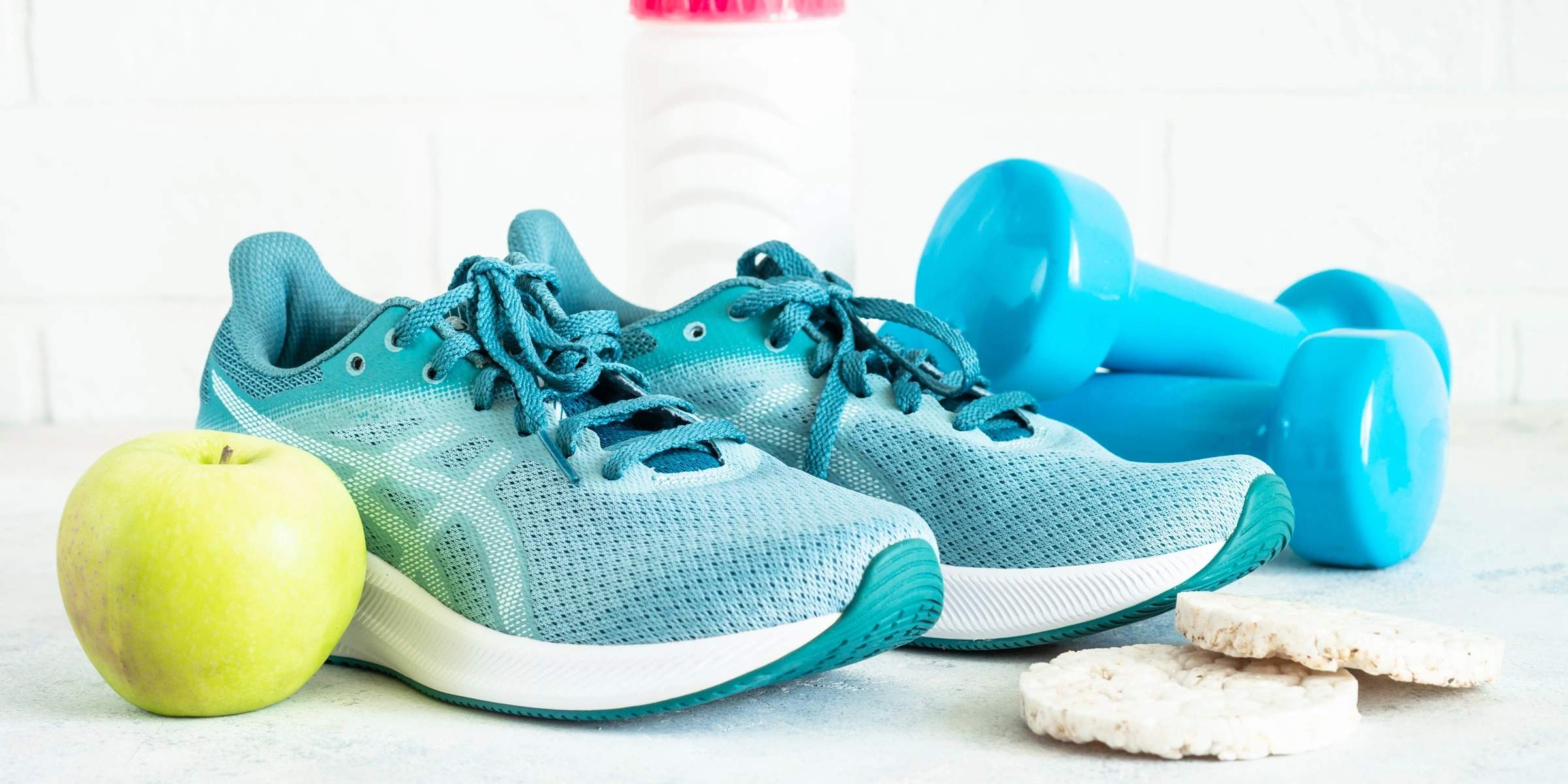
Running shoes beside a pair of dumbbells, a water bottle and an apple

Guide · Movement and activity

Best Exercises for Weight Loss at Home: A Simple Start

The best exercises for weight loss at home mix brisk movement with simple strength moves that use your own body weight. You do not need a gym or equipment. A sturdy chair, a wall and a little floor space are enough. Start below your limit, move with control and build up slowly.
Reviewed by
Dr Syed Mohd Sharib Yusuf
Last reviewed
23 October 2026
Reading time
6 min

Exercise at home for weight loss needs no gym or equipment. This SHIFT guide explains the best home exercises for weight loss and gives a simple beginner routine using body weight. It also covers whether home exercise can reduce belly fat and when to check with a doctor first.

What are the best exercises for weight loss at home?

Aim for a mix of two types: movement that makes you breathe harder, and strength work for your legs, hips, arms and trunk. Australia's physical activity guidelines recommend both resistance exercises and cardio.

Brisk movement

  • Walking, around the house, the block or a local park

  • Marching or jogging on the spot

  • Walking up and down stairs, if you have a safe set with a rail

  • Dancing to a few songs

Bodyweight strength moves

  • Sit-to-stand: stand up from a sturdy chair and sit back down with control.

  • Wall push-up: lean your hands on a wall and bend and straighten your arms.

  • Glute bridge: lie on your back with knees bent, then lift your hips.

  • Step-back lunge: hold a chair for balance and step one leg back.

  • Plank: hold a straight line from head to knees or feet.

  • Calf raise: hold a wall and rise onto your toes.

Squats, push-ups, lunges, bridges and planks also feature in no-equipment routines from Exercise Right. It is the public site of Exercise and Sports Science Australia.

Strength work helps build muscle and bone strength. As you gain muscle, your body uses more kilojoules at rest, according to the Better Health Channel.

A simple at-home routine for beginners

Start with two short strength sessions and some walking each week. Safety comes first, so follow these basics every time.

  • Warm up for about 5 minutes with light movement, such as walking or marching on the spot.

  • Focus on good form and control, not speed or numbers.

  • Stop if you feel sharp pain, and read the warning signs further down this guide.

The Better Health Channel suggests beginners start with one set of each exercise, using as few as 8 repeats. Rest each muscle group for at least 48 hours between strength sessions. Here is one way to set out a first week.
DayWhat to doHow much
MondayWarm-up, then the six strength moves1 set of 8 of each move
TuesdayBrisk walkA pace where you can still talk
WednesdayRest, or gentle stretchingAs you feel
ThursdayWarm-up, then the six strength moves1 set of 8 of each move
FridayBrisk walkA little longer than Tuesday if it felt easy
SaturdaySomething active you enjoyDancing, gardening or a longer walk
SundayRestNotice how your body feels

Over the following weeks, work up to 2 or 3 sets of each move. On walking days, check how many minutes of walking for weight loss to aim for, and how to build up.

How much exercise do you need each week?

The Australian Government's physical activity guidelines for adults set weekly targets for people aged 18 to 64. They suggest:

  • 2.5 to 5 hours of moderate activity, such as brisk walking, or

  • 1.25 to 2.5 hours of vigorous activity, such as jogging, or a mix of both

  • muscle-strengthening activity on at least 2 days, such as the strength moves above

The guidelines also say long periods of sitting can offset the benefits of being active. At home, break up sitting time, for example by moving around during phone calls.

If these amounts feel like a lot, start smaller. The guidelines say doing any physical activity is better than doing none.

Can you lose belly fat with home exercises?

Not from your stomach alone. Exercises for one body part do not remove fat from that spot, so crunches and sit-ups will not target belly fat.

Fat comes off across the whole body when you use more energy than you take in over time. Home exercise helps by adding to the energy you use, and by keeping muscle while you lose weight. Moves often searched as stomach weight loss exercises at home, such as planks and bridges, still have value: they strengthen your trunk and hips.

Read more about how to lose body fat, including why waist size matters.

A note on food and weight: If thinking about food, weight or numbers starts to feel stressful or hard to control, tell your doctor. You can also call the Butterfly Foundation National Helpline on 1800 33 4673 (8am to midnight AEST/AEDT, 7 days, except national public holidays). If you need to talk to someone now, call Lifeline on 13 11 14.

When should you check with a doctor first?

Check first if you have a heart condition, diabetes, an injury, joint pain that does not settle, or another long-term condition. Exercise Right advises talking to your GP and an accredited exercise professional before you start in these cases. The same goes if you are pregnant or have not exercised for a long time.

Some symptoms mean you should stop straight away. Common warning signs of a heart attack include chest pain, arm or shoulder pain and shortness of breath. Some people instead feel sick, sweaty or dizzy, or have pain in the back, neck or jaw.

If these signs do not ease, or you feel worse, after 10 minutes, call 000, as the Heart Foundation advises. Call 000 at once for severe symptoms, or if someone faints. Do not wait to see if they pass.

SHIFT does not provide emergency care. In a medical emergency, call 000 or go to your nearest emergency department.

Some health issues need a face-to-face check before you change your activity. Read about when in-person care is needed. With those checks done, the best exercises for weight loss at home are the ones you can repeat week after week. For food and habit ideas, see our other weight loss guides.

Common questions

Questions about exercising at home

Start moving with a plan that suits you

Book a consultation to plan safe home exercise around your health, fitness and any joint or heart concerns. Your first assessment is free, then $49 per follow-up. Terms apply.

Free first assessment ($0) for new patients. Follow-ups $49. No subscription. Terms apply.

Clinical review

Medically reviewed by Dr Syed Mohd Sharib Yusuf, MBBS, AMC (AHPRA registration MED0001678255). Last reviewed: 23 October 2026.